Custom Link Bar

Showing posts with label jakorah. Show all posts

6.7.18

Rules of Adaptation: A Short Manifesto for Retelling Stories Through Games

For many decades the film industry has been relying on non-original content for their huge multi-million dollar blockbuster hits. These films are typically remakes, sequels or adaptations, typically of novels or plays. There are obvious reasons for doing this: rather than gambling on the success of an original idea, these films can tap into the established fanbases provided by the original. With the budgets of films inflating year upon year it is no surprise that the producers seek this kind of safety net.

Just like cinema-goers, gamers are witnessing their industry shift away from original storylines and more towards derivative content. Within recent years we have seen the likes of Final Fantasy 15, Far Cry 5 and remakes of Crash Bandicoot and Dark Souls. Two of the most acclaimed games of 2017 were Super Mario Odyssey and Legend of Zelda: Breath of The Wild, both games belonging to beloved series with a grand total of 44 mainline games between them: it is safe to say that there is no shortage of sequels. At first glance it may seem like there is little distinction between the current strategies of the game and film industries. However, on closer inspection there is one noticeable absence: the games market is seeing comparatively fewer adaptations.

Now, this statement might seem absurd when titles like Star Wars: Battlefront II and Middle Earth: Shadow of War were among the highest-selling games of 2017 but I think there is a distinction to be made between games like these and 'true' adaptations-- these games aren't so much adapting the work, but rather inhabiting its worlds and using them as scenery for their own brand new experiences, isolated from the events of the source material. How many Star Wars games focus on the plot of the films? How many Middle Earth games focus on the stories told within Tolkein's books? While there's much to talk about with these kinds of games, what I'm more interested in is games that bring the source material's world to life and use it as a means to explore the source material's narrative and themes. So why are there so few?

With such a tumultuous history (see E.T.), it comes as no surprise that game publishers are more than a little skeptical to bank on adaptations outside of some all-encompassing franchises-- the stigma of poorly designed, hastily-constructed 'film tie-ins' lingers, long after their proliferation.

While this image problem is worth exploring, I want to focus on why designing for adaptations is technically challenging but has the potential to be one of the most rewarding ventures available for a game developer. First, I will discuss the main concerns that one could encounter when adapting a linear narrative to an interactive structure.

To reiterate, I would like to state that I'm only concerned with narrative-driven games that greatly leverage player choice. In such systems I think that there are two overlapping problems that a developer could encounter when adapting source material:

The Story is too Rigid 
Traditional narratives, like those found in literature and films, often derive their appeal from the specific events that occur within them: the conflicts, the twists and turns, the reveals. Remove these events and the work loses its substance and appeal. 
If that's the case, how do you reconcile the player operating in a manner which steers them away from these events? If the player is free to avoid these crucial events, won't we also lose the substance and appeal of the narrative?
To give an absurd example, how could we progress the plot of Romeo and Juliet if the player (as Romeo) does not fall in love with Juliet? The story would be locked in a standstill, the inciting incident remaining un-incited. 
If we stripped the player of their freedom we could prevent them from missing any significant events but we would then risk making a game without any meaningful decisions.
The Player is not the Hero 
Intriguing characters are also a strong source of appeal for creative works. Broadly speaking, it is the personality of these characters that we come to enjoy. However, if the player takes control of these characters can the same connection still be made?
The relationship between the player and the character is irrevocably altered: the player becomes the agent instead of an observer. As such, much of the joy from observing the character might not translate. Not only that, the actions made by the player will not necessarily be faithful to the character's nature-- the player could end up mutating the character into someone entirely different. 
While gameplay can be used to 'nudge' players into making in-character decisions, we would need to take care to ensure that these suggestions aren't forceful or we would risk robbing players of their volition. Ideally this process should be subliminal, without limiting player freedom in any tangible measure.

If we look at these two concerns we can see that there is an underlying issue that connects them:
player choice v. faithfulness to source. With each problem we are given a situation where reducing the freedoms of the player would lessen the extent of the issue but in doing so we would be limiting the potential for engagement and interaction.

While all game adaptations will suffer from this dilemma in some form, the severity of the problem will vary. What is key is finding source material which has the capacity for a broad range of choices that can alter the source's story elements without being detrimental to its 'essence'. To put this in other words:

How easy is it to conceive of an outcome that diverges from the source while also maintaining its central ideas?

Therefore, the potential a given work has for a game adaptation will depend on how well you can construct branching paths that diverge from the source that still convincingly fit within its logic and values. The feasibility of this is dependent on the level of depth provided by the material, not just in terms of breadth of cast and locations but also in the strength and prominence of its core concepts.

If we were to look at a series like A Song of Ice and Fire, where a great amount of time is spent pouring detail into the characters, their relationships, and the immense world that they inhabit, we can see that it provides a solid foundation for expanding and reinterpreting its storyline. In a game adaptation of this work, it wouldn't be difficult to theorise alternative timelines if certain events were altered or avoided altogether. Sure, each fan would arrive at a different conclusion but so long as their imaginings abide by the same logic of the source it would be disingenuous to view it as unreasonable. If these potential scenarios still reflected the grim, cut-throat fantasy that the series is known for there would be no doubt within the player's mind that this new plotline was anything other than an authentic A Song of Ice and Fire story.

While an outcome of good writing is consistency within the characters and world, the level of consistency required to allow for new ideas, events, and characters to be easily extrapolated is inconsequential for the consumption of the work and as such it is typically incidental in its inception. Because of this, many adaptations must instead rely on the strengths of the concepts within the source-- rather than examining it on a superficial level, only analysing what is presented overtly, the developer should instead examine the work on a more abstract and conceptual level: the themes, the motifs, the central message. However this isn't to say that these surface-level features can be entirely ignored-- without them the adaptation may be unrecognisable to the average player.

While all mediums need to worry about the extrapolation of detail (e.g. how do you design a set in a film based on its description in a book?), games are unique in that they are the only medium which neccessitates the derivation of entirely new scenarios.

Now you might ask why a game should offer the player the freedom of choice when it is so detrimental to the structure of the source's narrative. However, if you are willing to ask such a question you must also be willing to concede that an adaptation bearing such a constraint would be inferior as it would be failing to take advantage of the only unique property inherent to video games: interactivity. By preventing the player from interacting with the narrative you are not creating a narrative-driven game-- you are creating a film interspersed with gameplay.

Some players may argue that they only want to proceed through the game along the same story beats as the original. However, what I am suggesting is not necessarily opposed to this stance. Instead, this proposed design would contain the original's plot threads as well as a multitude of others tailored by the developer. In this case, if the player was determined to achieve the same story outcome as the source material they would have to make identical decisions to the source's protagonist. In such a playthrough the player must submit entirely to the role of the protagonist as laid out within the source, embracing the same successes, hardships and defeats that they themselves experienced.

Instead of these plot beats simply being handed to the player as an on rails experience, this 'original route' is presented as just another path within the narrative that the player may find themselves on, consciously or not.

If they want to become the hero just like the lead, the player will have to become a hero themselves.

Not only that, by providing alternative outcomes the player is also given a chance to challenge the original's resolutions. Superficially, this could be as simple as making a different decision from the source's protagonist ("If I was in their situation, I would do X"). More significantly, the player could challenge the conceptual and idealogical conclusions the author arrives at ("while the work says I shouldn't do Y, I'm going to do it anyway because I believe it will provide the best outcome"). In this case the player has a chance to express any grievances they have with the work's ideas. More importantly, the author or developer can then respond to these objections via game feedback which the player can then explore. This back-and-forth can become a conversation between the player and the creator. No other medium has the power to do this.

With this structure, the player is given the opportunity to understand the ideas of the source much more intimately than they would otherwise. The creator can sway players towards their point of view by tailoring their ideas in a way that targets each player on an individual level. Different facets can be given greater attention. Topics can be revisted. The player is free to delve deeper into the mind of the creator.

Let's take a brief look at the game Arkham Asylum. Here, the player is given the role of Batman, tasked with quelling the chaos that has taken hold within the titular asylum. Following the tradition of the Batman comic series, the Batman in Arkham Asylum is limited to non-lethal actions. Refraining to kill is at the core of his identity: if he became a killer then he would not be any better than the villains he pursues. This ideal lies at the foundation of his rivalry with the Joker-- the Joker's ultimate goal being to 'break' Batman, pushing him over the edge and turning him into a murderer, thus stripping him of his prestige and heroic title. It is one of the many reasons why their rivalry is a highlight of comic medium-- the two are locked in an endless struggle where neither can kill the other without forsaking their own ideology: if Batman kills the Joker he loses his status as a righteous hero. If the Joker kills Batman, he will die a martyr, his status as hero solidified.

When creating a Batman game, we would also want the player to grapple with this struggle. However this is one aspect of the narrative that Arkham Asylum fails to achieve. Within the game the player is forced into a position where they must be non-lethal, by virtue of there being no mechanism for lethality. The player is forced to accept non-lethality as a rule of the world, rather than as a self-imposed ideology that must be fought or perhaps even challenged. The player has no choice but to obey this mantra without the understanding or conviction behind it-- they are Batman in appearance but not in spirit.

Now what if we had an Arkham game where the player was given the option of firearms, knives and other lethal tools alongside Batman's usual repertoire? How would players react? Let's look at a hypothetical situation where this could come into play:

As the Batman, the player goes through each level apprehending villains. Being aware of the hero's beliefs they decide to ignore any opportunity to use firearms or other lethal devices, no matter how enticing or practical they may be. This routine continues level after level after level until the player encounters a villain so strong they can't bring them down no matter how hard they try. Again and again the player continues to fail, making next to no progress with each subsequent defeat. Bathed in failure and frustration, the player is tempted to use a weapon, lulled by the promise that it will provide the edge they need to succeed...

In this situation, what would the player do? Out of frustration would they give in to violence or would they try to persevere, hoping to preserve Batman's heroic reputation?

Regardless of the player's choice, they have been pitted in a scenario that encapsulates the frustration and discipline that Batman has to battle on a day to day basis: the player is given a look into the struggle of what it actually means to be Batman.

For such a premise to work effectively it is paramount that this non-lethality ideology is conveyed before the incident and the consequences of breaking it are displayed thereafter. In this case, the player needs to be aware beforehand of the importance of non-lethality from Batman's point of view. Without this, it might not be clear to the player (especially those unfamiliar with the character) why Batman doesn't kill or what is at stake if he does give in to those urges. If the game fails to illustrate the struggle of maintaining discipline and the consequences of giving in, the player might not make the connection and remain oblivious to the gravity of their action. It needs to be clear: by using the gun, they've let the Joker win.

While the technical requirements for a vast system of interconnected paths would distress any would-be developer, I think the greatest concern for this type of game structure lies with the source material's rights holder: would they really be comfortable with their creation being twisted and warped for the sake of player freedom? If we look at our Batman example, I think it is abundantly clear that DC Comics would be more than a little hesitant to greenlight a proposal that includes a feature where Batman can mercilessly gun down villains. Even if they understood the developer's reasoning as to why such a scene could benefit the exploration of its themes, they are still gambling on the success of its execution. If it fails, it could irrevocably warp the public perception of the material. A failure to convey the ideas faithfully wouldn't necessarily have to coincide with a failure from a mechanical point of view, either-- excellent gameplay with a message inconsistent with the source could prove just as detrimental. If our Batman game's shooting mechanics end up being too good and too fun and without adequate narrative repercussions, players using firearms might end up as the norm with many associating that playstyle with the character in their other appearances. Against the author's will, the central ideas embedded within the work are washed away. In such a situation it would be hard to see another author follow suit and willingly surrender their works to the additions necessary to make a game adaptation as effective as possible.

This leaves the medium in a difficult position, unable to maximise the potential of the source's material without frightening the author. A change to this structure would require some gradual changes within the industry over the course of several years. Above all, this style of ultra-divergent, choice-driven approach to narrative must first become commonplace within the industry. If the appeal of this kind of story continues to grow, it wouldn't be hard to imagine a few daring authors willing to pioneer this style of adaptation. If these early-adopters manage to find some form of success it wouldn't be too difficult to envision this approach establishing itself as a standard practice. This narrative style would also open the door to a great wealth of works that could be considered 'unadaptable' using traditional game narrative structures. While this reality may seem promising it is also important to remember that failures are also inevitable. It goes without saying, but a large enough catastrophe could send the whole industry reeling (see E.T.).

Regardless, I think a push towards this design is necessary for the growth of the medium as a whole, not just for the sake of adaptations. I think that the medium's hesitance to build upon previous literature has been detrimental to the overall quality of the storytelling within games. Due the relatively young age of the medium, many will argue that it is only natural that it fails to reach the same heights as its peers. However, I think that this is the exact reason why games need to borrow more from the older, more defined mediums-- rather than start from the beginning we should propel our own advancement by first standing on the shoulders of giants. Great potential awaits!


◇◆◇

In the future, I would like to explore how certain works could be adapted into video games using this criteria, taking time to show how this theory could be applied in various cases.

The first work I will tackle is Sui Ishida's manga, Tokyo Ghoul. While relatively unknown outside of the anime and manga community it does provide a vast array of possibilities for potential game adaptations without having to delve too deep into the source material. As such, it provides a great starting point for discussion. Following that, I would like to examine the novel, All Quiet on the Western Front by Erich Maria Remarque. See you then.

◇◆◇

29.1.18

Difficulty is not an Option

There has been a lot of hubbub in recent months surrounding the concept of difficulty in games: can games be too hard? Can they be too easy? Should the player be able to regulate their difficulty? This topic is nothing new within the community: it has reemerged time and time again, unearthing itself alongside the release of some new game that disrespects the player for picking less-challenging difficulties1, or introducing some novel method of regulating difficulty2, or perhaps the absence of any difficulty settings at all3. Within each iteration of this debate the same two factions arise. The first group could be roughly classified as 'classical gamers' and are typically against all design features that diminish the intended challenge of a game. Their beliefs staunchly oppose the proliferation of features that promote design elements such as 'hand-holding' and 'rubber-banding'. In their view, these features diminish the level of challenge with a game, so much so in some cases that the act of completing them no longer feels like an achievement. And what is a game without any challenge or achievement? Conversely, the opposition is composed of players who believe that a game's purpose is to provide the player with 'fun', or more loosely, entertainment. Simplistically speaking, their position is concerned with making games as accessible as possible to its player base-- if a game is turning away players in frustration due to its design or due to its challenge, then the developer has failed to make an entertaining, and therefore worthwhile game.


With each iteration of these arguments, the community never reaches any sort of consensus; the arguments typically boil down to whether the focus of a game should be to provide a challenge or to entertain the player as much as possible. For classical gamers these two ideas may be one and the same (and its the synthesis of these two attributes that makes a game a game). For many others however these motives could not be any more diametrically opposed. However, the ideas being discussed at the root of this debate are completely misguided. Instead of arguing whether or not games are too easy or too difficult we should be asking why games don't provide any meaningful narrative insight when the player fails-- player failure is rarely incorporated into the narrative despite it being a fundamental part of the experience for almost all playthroughs in any game.

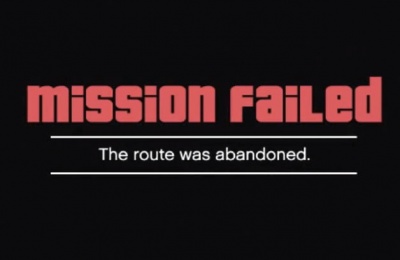
GTA V

'Player failure' is a situation in which the player has failed to achieve something expected of them by the game. This can be caused by a broad range of factors depending on the type of game: falling off a stage in a platformer, losing all your health in a shoot 'em up, or even failing a mission objective in a first person shooter. In most cases a player failure results in some kind of 'fail-state': a situation in which the player cannot progress any further and must retry the sequence again. Essentially a GAME OVER or MISSION FAILED screen (see image above). During this process the player is whisked back to some previous position before the failure occurred, typically incurring some sort of quantitative penalty in the process: coins, points, lives, souls, etc. Apart from these small penalties, the existence of the failure is typically forgotten by the game: it is treated as an unwanted mistake and is erased from the experience without a trace, never to be seen again. This is the problem with games, not how easy or hard they are.


It is these kinds of situations where the player has failed to achieve their role that the game (and the developer by extension) should have a profound interest in. So long as it wasn't a bug-related issue, the reason for the player's failure is due to the player themselves. It should be within the developer's interest to contextualise the player's failure within the experience they are trying to tell, not to simply discard it. What does it mean to have failed saving the princess? Failed to save a hostage? Failed to escape the dungeon? If these situations are all possible within the game, the narrative should have an answer for them.


It is important to make the distinction between two types of player failure: mechanical and narrative. While there should be significant overlap between the two4, it is important to highlight the difference and how each uniquely affects the player's experience. Mechanical failure is due to the player failing to use the game's mechanics to solve the problem given to them. This 'problem' could be a level in a platformer, an enemy in a fighter, or a puzzle in a puzzler. Failure in such systems is usually caused by the player's lack of understanding or misapplication of a particular mechanic or system. Mechanical failure varies from game to game, but the rules that govern them are explicit within the design: falling off the stage, losing all your health, reaching an unwinnable state in a puzzle. In such situations, some sort of 'reset' is required to pull the player out of their position as progress can no longer be made-- you can't progress through a level any more if you have fallen off of all the platforms. Resetting the game allows for the player to revise their tactics and experiment, over and over, plugging gaps in their knowledge and boosting their understanding of the systems in play. After an indeterminate amount of time you would expect the player to be able to reach a level of understanding where they can now complete the problem that they previously failed. This 'trial and error' approach forms the fundamental backbone of almost all games as well as the primary tenet of the classical gamers' philosophy.


Now on the other hand, a narrative failure exists when the player fails to do something expected of them by the narrative-- failing to aid a character, failing to track a suspect, killing an ally and so forth. These are objectives that are not explicit within the games rules-- they are expressed solely through the narrative and are present only as long as the narrative requires it. These additional rules are forced into a game because the narrative created ceases to function when unexpected actions are made: you cannot save the man we asked you to kill. You cannot betray your allies. You must save the princess. Deviating from the expected path is treated as a fail-state only because it breaks these additional narrative rules used to safeguard the plot. As ridiculous as it may sound, why do games need to rely on these additional rules solely for narrative cohesion? Why are actions that are mechanically sound within the universe considered fail-states solely due narrative concerns? It is entirely possible for the game to continue despite the narrative failure committed by the player, yet it chooses not to.


Narrative failures arise from a game narrative that consciously limits the set of actions permissible within the game's systems.


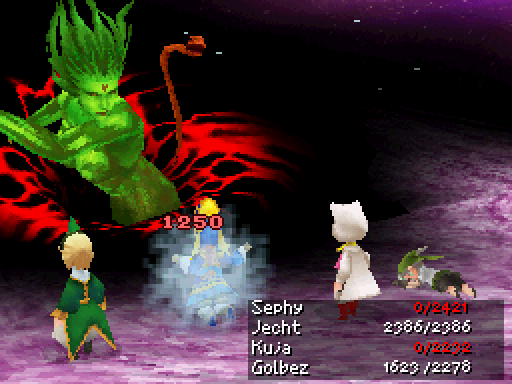
To put it into other words, narrative failures are a result of a narrative being imposed on game systems that it is unfit to serve. When the narrative was written it didn't take into account all the options available to the player through the game's design. Or even worse, the writers decided that certain types of play were simply 'wrong', despite them being mechanically sound. This refusal to handle any situation other than what is deemed 'normative behaviour' has stifled games' ability to tell anything meaningful that exists outside of what is desired. This aversion reaches the point of absurdity where some games5 have situations in which you are forced to lose to a certain enemy. Unbeknownst to the player, the rules for succeeding and failing have been swapped for this scenario. Now what is this warped situation supposed to convey? The player is left in confusion; the game has suddenly decided that failure is desirable, but only when it wants it to. This situation also creates dissonance in future playthroughs where the player, having knowledge of this scenario, realises it is in their best interest to stop resisting and allow these enemies to defeat you, breaking the role of their character.

The first encounter with the Cloud of Darkness in FFIII is one such instance of an unwinnable fight

We reach such absurd scenarios when we treat narrative failures no differently than mechanical failures. While a fail-state is adequate, perhaps even necessary, for mechanical failures, this is certainly not true for narrative failures. The difference lies in causality. With the mechanics of the game, it should be clear to the player (so long as they understand the systems) exactly why and how they failed: they missed a jump, they took too much damage, they finished the race last. Not only is it clear why they died, but also how they can prevent the failure from happening again: a more precise jump, taking less hits, making quicker laps. The same reasoning cannot be applied to narrative failures. Both the problem and the solution are only outlined within the narrative as much as it sees fit, sometimes surfacing only after the problem has been solved. There is also room for interpretation within each narrative as it's not always clear what you are supposed to do or how you are supposed to achieve it. Videos games are an interactive medium so why do we so rarely see games interacting with these different interpretations instead of disregarding them as another fail-state?


Here is a hypothetical situation. Imagine you play the role of a super-patriotic-almost-propaganda soldier sent on missions across the world with your team to combat terror. Your typical first-person shooter fanfare. So what happens if you decide to go against your orders and spare an enemy? Such an action would go against everything the game expects and wants you to do. In most games you would just be thrown into a fail-state and forced to restart the mission once you miss your opportunity. However this doesn't teach the player anything or allow them to interact with the narrative in any way-- their protest to the game's narrative ideals are left unchallenged and ignored so the player is left with nothing to do other than to shrug their shoulders and blindly follow the mission's orders without gaining any insight or consequence: the player is torn away from their role as a driving influence within the world and is instead forced into a much more passive role, one where their only choice is to follow the game's authority.


Instead of forbidding the player from acting freely, the game should allow the player to carry out their actions and then respond by shaping the narrative in a way that shows the player why their actions are wrong. The player should be convinced that they want to be the hero; they shouldn't be forced into the role. One such way of doing this is by providing a means for the player to face the consequences of their actions. Guilt could be produced by linking the player's 'incorrect' decision to new dire circumstances that emerge in the narrative: perhaps the target that the soldier spared goes on to kill the protagonist's allies in later missions. With the narrative irrevocably shifted in a negative direction, the player is constantly reminded of their failure. They may even regret their decision. Regardless of how they feel, a stain has been left on their experience. In such situations, players who fail (whether by choice or inability) still progress, but along a different path from the successful players. This alternate direction gives the players the opportunity to understand why their actions were treated as a failure. If the game is successful in their conviction, the player is going to be compelled to succeed in the future according to the narrative's own ideals, just like the other players who succeeded.


A practical example of this is the opening act of Undertale. Here, the developer Toby Fox managed to eliminate all forms of narrative-induced fail-states-- all narrative failures are accounted for within the game's narrative. In this scene, the player is introduced to Toriel, a mother-like figure who protects and cares for the protagonist after they fall into the underground. The protagonist's desire to escape the underground means that they have to venture deeper into it, putting themselves in greater danger-- something that Toriel is actively against. This is the source of the conflict: the player is pitted against their friend and the only way they can seemingly progress is by defeating her. However, to defeat her would mean killing her. The player is ofcourse not expected to make this choice. The narrative makes it clear that it wants you to save her-- the game has told you time and time again that "nobody needs to die". The player has probably spared previous enemies from death too, giving credence to this mantra. However, the way the player can spare these character's from death is unknown. This is the problem that the game wants you to solve.


In this example we have one mechanical failure and one narrative failure: losing all your health and dying, and killing Toriel. Now, in a traditionally-designed game, both failures would result in the same fail-state:

Undertale's Fail-State

However, in Undertale, killing Toriel doesn't lead to this situation. Instead the game continues onward. Shortly after the fight in this situation, the player is confronted by a character named Flowey. He brings into question the player's conduct: how could they be so horrific? how could they kill a friend? He wants the player to answer for their actions. Even after this dialogue, the consequences of the player's action can still be felt in later interactions when other characters note her absence. It is not unlikely that some players will end up reloading their save in an attempt to fix their mistake, not too unlike the reset that occurs during a fail-state. Perhaps they have been conditioned to do so. Here Undertale's mastery shines: the game confronts the player's inability to face the consequences of their failures within its own narrative. When the player reloads their save, if they spare Toriel during this attempt, the player is once again confronted by Flowey except this time he taunts you, telling you that even if Toriel is alive, he knows that you murdered her before. He prevents the player from erasing their own shortcomings, leaving the guilt to haunt the player for the remainder of the journey. They now know not to take the consequences of their actions so lightly.


In this situation, difficulty wasn't needed-- while more insightful players may have been able to avoid Toriel's death completely, less experienced players may have killed her and perhaps even reset their save in a vain attempt to save her. Their progress through the game is not halted due to their narrative failure. Instead they are forced to live with it while also gaining another chance to understand the permanence of their actions and the weight of the lives of others: both key motifs within the game's narrative. Players who faced guilt will be more determined to succeed in future interactions-- the guilt serving as a reminder to what happens when they fail. They learn from this mistake and develop as players. They are brought onto the same page as those that already understood these concepts of consequence and morality and managed to succeed in sparing Toriel. Both groups of players took different paths but have arrived at the same conclusion.


Traditionally-designed games don't have a narrative as receptive to this kind of failure. Instead, you are forced to pick the narrative outcome that the developer wants you to achieve. They might give you a single option, they might give you many, but rarely is failing one of them. How can successes conveyed by the narrative have any real significance if success is the only outcome available within it? When there is no choice for progress except winning we are ignoring all of the stories that can only be told through defeat.


The provision of difficulty settings are used as a quick-fix for these meaningless, success-driven narratives that fail to accommodate the player. Using difficulty settings is akin to providing a cure for the symptom without treating the underlying issue itself. It also introduces a new, more severe problem of its own as changing the difficulty of the game fundamentally changes its nature. Playing a shooter on easy as opposed to very hard is the difference between assuming the role of an indestructible demigod and an ordinary infantryman. The tone, the atmosphere, even the ideas the narrative conveys all shift. As a developer you need to have control over all of these tools in order to fine-tune the experiences that you design-- deferring them to the player will only warp their outcome. Despite this, it is understandable why some developers implement them regardless of their adverse effects. The pressure to accommodate players of low ability is often necessary to keep the game open to them: perhaps some experience is better than none at all. However, instead of deregulating difficulty, developers should aim to rid their games of fail-states induced from narrative failures. Not only would they be providing new avenues for their experiences to explore, they also provide methods of interacting with players who otherwise might be unable. It is nothing but arrogance from developers and gamers who belittle players who pick lower difficulties. The true folly lies with those creators who are intolerant to working with the concept of failure.


[1] It Might Be Time To Rethink Difficulty Menus
https://kotaku.com/it-might-be-time-to-rethink-difficulty-menus-1820961183

[2] Celeste is hard, but its creators are smart about difficulty
https://www.polygon.com/2018/1/26/16935964/celeste-difficulty-assist-mode

[3] Code Vein Director Touches On the Game’s Difficulty, Character Development, and…Vampires
http://www.siliconera.com/2017/09/25/code-vein-director-touches-games-difficulty-character-development-andvampires/

[4] Synthesising Gameplay and Narrative: A Look into Papers Please and Undertale
http://www.jakorah.com/2017/04/synthesising-gameplay-and-narrative.html

[5] Hopeless Boss Fight
http://tvtropes.org/pmwiki/pmwiki.php/Main/HopelessBossFight

8.12.17

21 In Review

Introduction
I've been using the same iPhone3GS since 2009, goodness knows why. It's been in a pretty sorry state for a while now: a broken power button, a battery life that barely exceeds an hour, and a half-eroded casing caused by a decade's worth of palm sweat being swept across its sides. Somehow, almost miraculously, it has kept chugging along-- even if its operating system is now outdated by at least 5 iOS versions. Needless to say, the phone contains a lot of history. While searching for some chords for an old song of mine in its notes, I stumbled across several entries of my old life journal. I kept this journal going for about four or five years, only stopping soon after turning twenty. I assumed it was a waste of time; my life events were too mundane and uneventful to even bother writing down. Regardless, I skimmed through all these notes, some of which stretched back to when I was fifteen. Most of them were utterly mundane or incredibly melodramatic: moping about school and university, sulking about crushes, the usual teenage angst. Despite that, I spent a good part of an evening reading them all, rediscovering the walking cringe I was all those years ago.

It gave me a pretty clear snapshot of my life. After its abrupt end at 20 I now realise I have a sizable gap missing from my record. And to be quite frank, I can't even recall what happened in those two years after 20 all that well. It's a little disheartening; I'm actually rather envious now of people who have documented large portions of their life in detail. Having such a comprehensive snapshot of your life is something that seems so appealing now-- apart from the constant ritual of updating and maintaining it all.

I've just turned 22 these past few weeks so I thought I would revive this old practice, albeit in a slightly different form. Being as busy (lazy) as I am I thought it would be nice to create an annual review of everything I enjoyed watching, playing or listening to this past year. So many times in the past I've tried to remember bands, films, and games I really enjoyed at various chapters of my life but I can barely recall any of them. Of all the bands I used to listen to during high school, the only one I can really remember is Coldplay. Clearly this is inexcusable.

Here, I hope to cover more or less everything in the period from my 21st birthday until now; a timeframe that covers about two thirds of my final year at University as well my first few months post-graduation. It's a bloody long piece and I do apologise for that, but it might be a worthwhile read for anyone that is interested in knowing a little more about me and my influences, or at least where I'm coming from.


Games
21 was another quiet year for me concerning games. Yet again, I failed to buy any new systems and instead, I have continued to make use of my older consoles and emulators. To be quite frank, the industry as a whole is in such a state I think this could be for the best. I really don't think games have matured at all in the past decade which is quite upsetting when you consider what great strides they took in the decades previous. With shovelware destroying the indie scene and AAA titles being routinely gutted by publishers flogging microtransactions and DLC, things are looking pretty bleak. Here's hoping to a better year in 2018.

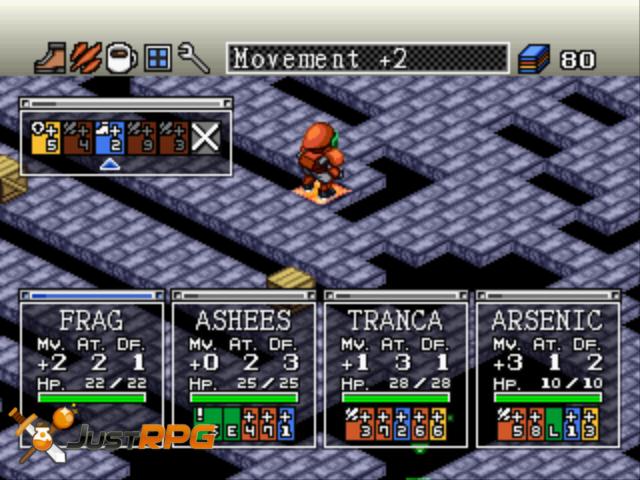
I did however manage to complete a single game this year! The title, Battle Hunter, was one of the first games I ever owned for PS1. While much of the appeal of this game is sentimental- having played it as a child- it does have some notable features which are fairly unique; it's not everyday that you run into a procedurally-generated, tactical-RPG structured like a board game with dice rolls and cards. I do think the developers deserve some praise for the straightforwardness of the system as gameplay mechanics are deceptively simple despite all these additions being stacked upon the standard turn-based TRPG model. Another pleasant quirk is that every character model has their own unique set of animations for all actions: celebrations, idling, attacking, and so on. This goes such a long way for a game where the majority of characters don't have a single line of dialogue: their personality is reflected solely in their movements. Outside of these features however, is a game that is incredibly barebones, with many signs hinting toward a rushed development cycle. Many of these are issues concern variety. The most egregious problem with the game is the lack of variation between levels. While the procedural generation can create a near-endless amount of layouts, the content within each is identical-- a series of grey, drab tiles. A monochrome wasteland populated only by crates and characters. That is it. For every single level.


Not only that, but level generation does not have any balancing meaning that the outcome of matches heavily depends on luck; opponents can spawn in areas surrounded by boxes while you spawn on the opposite end of the map, worlds away from anything meaningful, spending turn after turn crawling your way across the barren world to reach whatever scraps your opponent may leave behind. Outside of character sprites, the graphics on offer lack variety-- there are only four different enemies that can be encountered in the entirety of the game, one of which is a just a living pool of ooze. Other issues include a text box so small that it can only display five or six words at a time-- the content of which is sometimes comically bad due to poor localisation. Despite all these flaws, I still hold this game close to my heart. Explaining why such a game, pushed through production with such blatant defects would garner my admiration would require an entire article of its own so I'll have to save that for another day. Shockingly, there are others that share my sentiment[1].

Another game that grabbed my attention in a big way this year is Super Smash Bros. Melee. I've been playing casually with friends for at least a decade, but in these past few years I've been slowly creeping into its competitive sphere. Its been the only eSport so far that has piqued my curiosity and actually tempted me to get involved. I've been watching live tournaments on Twitch regularly since EVO 2016 and I've been hooked on it ever since. Other eSports have often left me indifferent and uninterested in watching again or engaging in the communities. One thing Melee has over other titles such as DotA and Street Fighter is a rich history due to the enduring nature of its game. Even after 16 years, while other franchises may have seen numerous iterations of their game pass by, the Melee community has continued to grow around the same game, exactly as it was all those years ago. While this has some logistical implications for the community (relics such as CRT TVs and Gamecube controllers are still required for play), it has allowed for the cultivation of a long, illustrious, and most importantly, compelling narrative that creates clear points of interest for amateurs such as myself. On top of that, I think that the diverse backgrounds within the community (in all areas with the exception of gender) has created a blend of top players with characteristics I feel we rarely see in other sports. The 'Five Gods' of the Smash mythology captures a lot of the variety within the scene with each 'god' having a distinct personality, background, playstyle, and in-game character. Joseph 'Mang0' Marquez, one of the gods and arguably the face of Melee, is in my opinion one of the most interesting and remarkable eSports players of all time.

I realise this picture does kind of make them all look the same-- a group of pale twenty-somethings with facial hair-- but I assure you there is more to it than what meets the eye!!

Naturally, I've been playing the game regularly on top of watching tournaments. While it was a frequent activity during pre-drinking (and post-drinking) in my last few years of university, my recent graduation meant that the number of chances I got to play also shrunk, which is particularly frustrating when I've grown accustomed to the idea of having easy access to Melee-playing flatmates. Having moved back home I've started participating in a few local monthlies to help feed the habit. Outside of these few events I rarely sit down to play but this is quite possibly the most invested I have ever been in a game-- not since my mid-teens playing TF2 have I thrown away so much time playing, reading, watching and involving myself in a game for such a long period of time. While I have dabbled in fighting games before, none of them have come close to engaging me on the same level as the Super Smash Bros. series. I think the reason for this is that the game allows for so many styles of play due to its loose adherence to genre convention:

Getting rid of the health bar was one of the best decisions they could have ever made.

By getting rid of such a fundamental staple of the genre and instead replacing it with a percentage meter meant that completely new strategies could be formed. For those unfamiliar, Super Smash Bros. uses a system where the player's objective is to knock the other player off of the stage. Successfully knocking them off results in the loss of their life, known as a 'stock'. The distance a character is knocked back is dependent on the strength of the attack as well as how much they have been hit already. This change allows for two distinct playstyles as opposed to the single strategy available in standard fighting games. In the games that use health bars, the player is boxed into one strategy-- do more damage to the opponent than they do to you. While this is more of an 'umbrella'of various strategies rather than one in of itself, the creativity of the player is still confined to this single tenet. On the other hand, Melee, due to its knockback system, offers two possible strategies:

  • Deal as much damage as possible, and finish with a move so strong, it guarantees a knockout.
  • Pressure the opponent into a certain position that allows us to knock them out with a move that would not normally cause such an outcome.

The first strategy is almost identical to the traditional fighting game strategy "hit them more than they hit you". The latter however is something unique to Smash Bros. This strategy, known as "gimping" within the smash community, still uses the same skillset required by the first strategy: positional awareness, opponent prediction and reaction, as well as technical ability. However, it applies these skills in an entirely different way. Players are not confined to either strategy in a match: instead, players will shift between them on a moment's notice. This results in a much more varied match where knockouts are essentially possible at any given moment, given the right circumstance. How good or bad a player's situation is depends on so much more than just their 'health'. It is this kind of variety that makes Smash Bros. stand to me. Not just variety in strategy but also variety in characters and stages. The amount of situations possible due to different matchups on different stages is truly mind-boggling. The only drawback to its breadth of scenarios is that it has created a larger disparity between the canonically good and bad characters: of the 26 characters available in game, only the top eight are regularly used and the bottom six are considered so unfavourable that they are almost never seen in tournament.

Despite its success, fellow fighting game developers seem to stick rigidly to the well-defined system outlined by Street Fighter II. It's upsetting to find that the fighting game genre has barely changed in the past 20 years, with very little experimentation and creativity outside of presentation. I do think that the success of Smash Bros. at least partially lends its popularity to its uniqueness within the market, especially with players outside of the fighting game community. I really think it would be interesting to see more developers throw out more of the design features that have entrenched themselves so deeply into the fighting game genre. I personally would love to see a fighting game that tries to adapt the highly cerebral fighting style found within Hunter x Hunter.

I myself have a few ideas for a fairly unique fighting game. Hopefully I'll have a chance to make it after The Valentine Watch. See you in 2020...


Film
During my sophomore and junior years I was watching films almost daily. Unfortunately, this past year has seen this rate decline to maybe one or two a month. As a student I used to borrow DVDs from the university library (the only time you would ever catch a cool dude like me there) regularly. They had a wide array of films from all over the world, ranging from Hollywood blockbusters to obscure foreign film. The whole process was so much more hassle-free than streaming: you never had to worry about resolution or buffering. Not many people used this section of the library: it often felt like I had the entire department to myself. Looking back, this may be the part of university life I miss the most, as bleak as that may sound.

With the help of the library my interest in Chinese, Korean and Japanese film grew. I had a particular passion for Korean Neo-Noir films such as Memories of Murder, The Chaser, as well as The Vengeance Trilogy. During this time, Bong Joon-Ho quickly cemented himself as my favourite director. Perhaps surprisingly, the darker elements of his comedy remind me a lot of contemporary British creators such as Chris Morris and Charlie Brooker: their bleak comedic depictions of British culture appear to be depressingly similar to Bong's own outlook on various aspects of South Korean life. These filmmakers have had an unrivaled influence on me and my own work, more so than any game developer.

My passion for these creators has never diminished-- I simply ran out of their material to consume. While Morris, Brooker, and their peers tend to only release new shows every few years, if ever, I ran into an entirely different problem with Asian cinema: a lack of localisation for many films. While the university library had a great selection, I've failed to find anywhere that can compare, legal or otherwise. Initially this search was for a service to plug the gaps in the library's own catalogue. Having graduated and lost access to it, this alternative service would need to function as a complete replacement. So far I haven't had much luck.

As I moved through directors' libraries I've been forced to look in increasingly obscure places, with increasingly questionable quality. This eventually came to a head in my senior year when I was trawling through a Chinese website looking for the English subtitles for a film by Lam Nai-Choi that only had an eye-watering 240p raw available (the man is a god, I highly recommend watching his films if you can). Essentially, I had reached a point where the amount of effort I had to put into watching the films I wanted to see could no longer justified itself.

This past year both Bong Joon-Ho and Park Chan-Wook, another favourite, released films. I was pretty psyched for both of them, having previously devoured all of their available work and was still hungry for more. While I was fairly indifferent towards Bong's Okja, I really enjoyed Park's The Handmaiden-- the character of Count Fujiwara may be my favourite character of all time.


This summer I also attended my first film festival. I didn't really know what to expect: to be quite frank, I didn't really know that there were film festivals outside of the glitzy and glamorous events regularly covered in news features. I was especially surprised when it turned out that there was one barely 20 minutes away from my town. I of course went through a few times and I actually really enjoyed it! Being able to go into a viewing for a film that you might have never heard of before, and may never come across again is quite exciting. Having the director present at many of these showings was also a neat bonus. Before now, I never really had a chance to see a director, or any creator in general for that matter, just talk about their work in person. Best of all however, was simply being able to attend two or three screenings back-to-back in a single day; there was something truly wonderful about investing an entire day into immersing yourself in film. While you could argue that you can easily achieve a similar effect from home, there is definitely something missing when compared to the same experience on the big screen. While I didn't see anything truly mindblowing, I enjoyed everything I saw. Ikari was probably the best of the lot.

The Film Festival also exposed me to a few hipster cinemas in the area and I've been going to them fairly regularly since. Perhaps the best film I have seen post-festival is Loving Vincent, which is certainly one of the most beautiful films I've come across (even if its beauty is concentrated heavily in some scenes more than others). Aside from that, two other films I have seen this past year that I loved are Love Exposure and The Shape of Voice. Naoko Yamada, the director of the latter actually visited Scotland earlier in the year for one of its screenings. I'm actually quite devastated that I missed an opportunity meet her. Hopefully it's not the last!


Music
Nearly every year of university had me listening to something distinct from the previous: first year had Steely Dan and Simon & Garfunkel, second year had Nujabes and chill-hop, and third year had American Football and Math Rock. Initially, my final year appeared to have had a much more subtle shift away from Math Rock and towards Emo, with bands such as Marietta, Boy's Life and The Promise Ring at the forefront. I immersed myself in this kind of music for the first half of the year but, like film, I simply ran out of good bands to listen to and just ended up exhausting the same six or seven albums. Trips through YouTube recommendations rarely cropped up anything new or exciting. That is until I came across this album:


A Vast Scenery by Hang in the Air. I don't even remember how exactly I came across it but this seemingly unknown album once again shifted my music preference in an entirely new direction. While I knew of a few bands from China (Chinese Football, LAVA|OX|SEA) and Japan (TricotA Picture of HerHyakkei) I hadn't even heard of any bands from Taiwan (well, apart from Elephant Gym), yet this album's style immediately grabbed me with its eclectic, lo-fi, 'rough around the edges' feel and its apparent sincerity. With this one album, all sorts of new, barely known albums found their way to me. YouTube recommendations started pulling out obscurities from the other end of the world and they were actually pretty good. Through this I've started listening to Sunset RollercoasterNo Party for Cao DongTouming Magazine and a fair few others.

I really couldn't tell you what exactly it is about these bands that really draws me to them. If I had to guess I would have said that their music just sounds more genuine and heartfelt than a lot of bands from the West. Maybe that's just because of the language barrier. Or maybe these East Asian bands just add their own regional 'flavour' into the mix. Or it might very well be all in my head and I am just a massive snob.

I also came across Fishmans by sheer coincidence while searching for a film soundtrack of all things. I've been slowly making my way through their discography but they have quickly become one of my favourite bands. Both Long Season and Uchu Nippon Setagaya are two of my favourite albums. I'm actually really looking forward to going through more of their work.

For the first time in a while it looks like I have enough band material to keep me busy, at least for the time being. Here's hoping.


Art
Around my 21st birthday my interest in art was beginning to manifest. I never really had an interest in paintings before then, often finding them pretentious and elitist: I really only liked art with vibrant colours and novel ideas. However, I slowly began to find tiny niches of traditional artists that I actually really enjoyed. This past year I slowly began to cultivate this pocket of artists, developing my interests alongside its growth. I think I can safely say that my previous assumptions surrounding art were a gross misunderstanding of the medium, leading me to gloss over so many concepts and ideas that I now find so interesting today. I think I can finally say that I 'get' art, or at the very least some rudimentary understanding of the paintings, artists, and movements present in recent centuries. I've really grown to love a lot of the late 19th Century art produced in and around the UK and France. Even a year ago I never would have believed that I would utter such a phrase.

I believe this recent interest is mostly rooted in my attendance at life drawing sessions in my last year of university. Up until this point, I had never spent much time drawing aside from my childhood. I would consider myself 'adequate enough' when it comes to pixel art but my talent with a pencil was pretty weak. I hoped these classes would improve my drawing ability so that, in turn, it would also improve my pixel art. Being the dork that I am, I wasn't a part of any other clubs either, so I thought it was about time I actually did something productive outside of lectures. Naturally, my drawings were piss poor to begin with, but they slowly developed with every session. I would argue that a lot of the improvements weren't to do with my ability to hold a pencil, but rather an increased understanding of how the body is-- how it's various curves interact with each other in different circumstances. My own sketches have become semi-tolerable which I am actually quite proud of.

As of now, artists such as John Singer Sargent, James McNeill Whistler, and Atkinson Grimshaw are among my favourites. This past year I have been fortunate enough to see a lot of their works in person at various galleries in the UK an US. I would highly recommend seeing a painting in person before making a judgment of it-- I didn't realise how much a monitor can warp the colours and minor details of a piece. Works like Sargent's Carnation, Lily, Lily, Rose didn't leave much of an impression on me when I viewed it online but after seeing the colossal painting in person, and in it's true colours no less, it left such a strong impression on me that it is almost certainly my favourite painting as of now. I think it's a great shame that paintings such as this are so unknown within the general public. Sargent is considered one of the great American artists, and this is one of his most well-known pieces, yet so few have heard of him, let alone the painting.

I think part of this is due to the perceived barrier to entry within the medium. I would argue that it has often been unfairly represented in contemporary culture with most of the attention it is given coming from criticisms of the pretentious and incestuous nature of the current scene: pineapples being mistaken for art pieces, seemingly blank canvases selling for millions... The list goes on. And while I agree with a lot of these points, especially those relating to the current prevalence of pseudo-sophistication, weak aesthetics and elitist communities surrounding a lot of contemporary art, I think a lot of people have unfairly formed an opinion on all styles of art based solely on their views of the contemporary art world. I think a lot of people agree that older works are 'nicer' because they are technical and complex, but it seems as though people stop there, failing or refusing to recognise what is beneath its surface-level aesthetics:


I think it's incredibly beneficial to anyone wanting to work in the visual arts to at least have a moderate interest in art outside of those found on Tumblr and Deviant Art. Not to say that artists on these platforms are without merit, rather that the quality of work that you will find in a gallery is magnitudes greater than your average internet artist. The density, composition, and technicality displayed in their works is certainly worth learning from, even today. These artists are the best of the best of the past millennium, you should take advantage of them!

Anyway, I'll stop being a knob prattling on about the supposed deeper meanings of art. I'll shut up about it until next year.


Ending Remarks
It seems as though this year has been a mix of discovery and stagnation. While I'm really excited that art has finally opened its doors to me, and that I have found new avenues of music to discover, I really hope I find something big that draws me back into film and video games. I would argue that these two mediums have been the most important to me in my life so far, so I'm a little scared that I seem to be straying further and further away from them, games in particular: I'm trying to be a game developer after all! Sadly it doesn't look like the game industry is moving in the direction I was hoping it would go. I'm still hoping for another indie auteur to make waves and pull me back into the scene.

Anyway, to close off, here is an updated version of my inspirations list that I included in my very first post:


And that's about it! Congratulations on finishing this fucking epic. I really do appreciate anyone that was willing to read this as it does actually mean something to me, as sappy as that sounds. I feel this year has been a bit of a weird one. I am really quite upset that I haven't got The Valentine Watch out yet as the original deadline was supposed to be the day before my 22nd birthday. It is shaping up very nicely however so I'll hopefully be back very, very, soon!

- J.A

P.S.
My apologies for not writing anything in six months. And now that I have actually written something, it is just a stream-of-consciousness personal blog that probably paints me as a complete tosser. Once again, my bad.

Normal programming will resume soon! I promise. Hopefully by the end of the month.

2.6.17

Embrace the Imperfect, the Bittersweet (Perfection is a Myth)

This is a vague response to a piece by Chris Dahlen called "The power of weakness: You can't save everyone, nor should you" in which he explores situations in various games where seemingly innocuous circumstances can considerably affect gameplay and the way players approach the game in the future encounters. Dahlen's example regarding Persona 4 is particularly resonant with the idea of this essay. Well worth a read.

A qualm I've had with recent video games, particularly those with branching narratives, is that they always seem to push the plot (explicitly or implicitly) towards the 'perfect ending': the conclusion where nobody dies, everyone is fulfilled and the ancient evil is vanquished. Regardless of the themes or narrative genre, this type of ending is typically pushed as the true, 'canon' ending. While I'm against games attaching preferences to certain outcomes since it invalidates players' choice, I feel that elevating these flawless runs is particularly disingenuous.

In many stories, regardless of structure, the hero typically reaches some sort of low point in their journey-- the death of a master, the destruction of a homeland, a betrayal of an ally, the list goes on. Typically these events reframe the character from a different perspective. The story takes a pause, and the hero takes a moment to reevaluate who they are and why they set out on their journey. In games, the choices we make as a player can come with similarly severe consequences and like the low points of these heroes, they too can provide the player with a moment of introspection to reflect on their decisions. But where games can really shine is in their ability to reach out and comment directly on the player's own decisions and circumstances.

However, with the proliferation of these 'perfect' endings there is no way to communicate any interesting ideas with the player-- there is no opportunity to really dig deep into the player's own mind. Since players can also practice 'save-scumming'[1] without penalty these perfect endings are easily achieved without any sort of development or growth from the player.

If the player can achieve the perfect surely that means that they have nothing new to learn from the game?

The idea of the perfect ending is not inherently bad, so long as it's not dissonant with the game's message. If a game does go on to include it, the requirement to obtain it should be far beyond the reach of most players. Only by understanding and learning the ideas the game has put across, taking these into account, and using them to develop and address their shortcomings should players be able to achieve narrative perfection within a game. While the effort required to achieve this will depend on the nature of the story being told, it seems as if there is a universal trend within the industry to make these flawless endings within everyone's grasp by the first or second playthrough. This leaves games with few opportunities to tackle any of the issues they attempt to explore through player choices. Typically these endings are reached by completing some additional side-quests or reaching a certain level of relationship with some characters, even if they don't appear to have any connection to the progression of the plot. These additions do not challenge the player. They are only there to guilt trip the player into wading through more of the game's content by dangling the bait of a 'true and complete' ending in front of their faces. The only thing that it really challenges is the player's patience.

This road to perfection is made all the easier due to the fact that players can simply revert saves with no punishment when a wrong decision is made or a mission fails. The current design philosophy allows players to save as much and as often as possible, meaning that all weight associated with each action is essentially eliminated-- the player can simply replay scenarios again and again until they discover the best or most fitting outcome for their character. This leaves little to no room for a game to actually tap into the psyche of the player and shape the story based upon their true self. If the player really is such a saint there are no flaws to examine or discuss.

However, there are a few instances of games taking advantage of these player habits. At the climax of the first act of Undertale, the player has to fight Toriel, a mother-like figure and teacher to the player. Up until this fight, the player is taught that it is possible to 'spare' the people you fight. Doing so usually involves uncovering a certain technique during the fight that subdues the adversary peacefully. Here, players need to figure out how to save Toriel in the midst of the fight while also avoiding her own attacks. As a result, many players in this situation may end up unintentionally killing her. After her death, the player is then berated by the antagonist for their killing of their own friend.

Naturally, at this point many players regret their actions and reset their game, redo the fight, and save Toriel, all in order to cleanse themselves of any wrongdoing they feel guilty about. Except here, unlike other games, the antagonist will mock you again after the fight. He still remembers what you've done. He informs you that while everyone else may have forgotten, he will still remember the sins you've committed. This is a powerful scene as it openly confronts the player and exposes their habit of erasing their mistakes as well as questioning their own morals. Is the player still a good person? Are they still a murderer? More interestingly however is the form of the punishment-- it isn't tangible like a score deduction or item loss. Instead, it only questions the player's own understanding of themselves. Those that truly concern themselves with playing perfect are given reason to question that image and even if that ideal is really attainable. While you may have saved her this time, he will remember you as a murderer and you can't change that. A small blemish- in an otherwise spotless image- that can't be washed away. Players may even behave differently as they realise that all their actions, in some sense, are final-- regardless of how the player attempts to circumvent their consequences. For a game that discusses morality, bounding consequences to their actions so tightly is incredibly compelling-- and necessary. It is no surprise that this event is for many one of the most memorable scenes from Undertale, or perhaps games in general as it is one of the few moments where a game so keenly cross-examines the player after exposing their actions.


It is important to note that not every game needs to introduce a meta-level response to tackle this habit of consequence avoidance. It is important however to prevent players from taking advantage of these systems if the game's narrative requires it. Many players will take advantage of flexible and unlimited saving if the game's mechanics permit it, even if it goes against the game's message. One method to eliminate this is for the game itself to take full control of when the game saves: whenever a major decision is made, the previous save is overwritten so that there is no way to redo your choice. Alternatively, the fallout from decisions could be delayed in such a way so that their actual results emerge much later into the playthrough. However, in such a system it might be difficult to deduce what decision led to the resulting outcome due to the blurring of the relationship between action and reaction. Depending on the nature of the game this could improve or damage the message as it leads to uncertainty within player as to whether or not they are actually culpable for the current scenario. Despite this, it shows that challenging decisions can still hold weight even if the game uses a mainstream saving system.

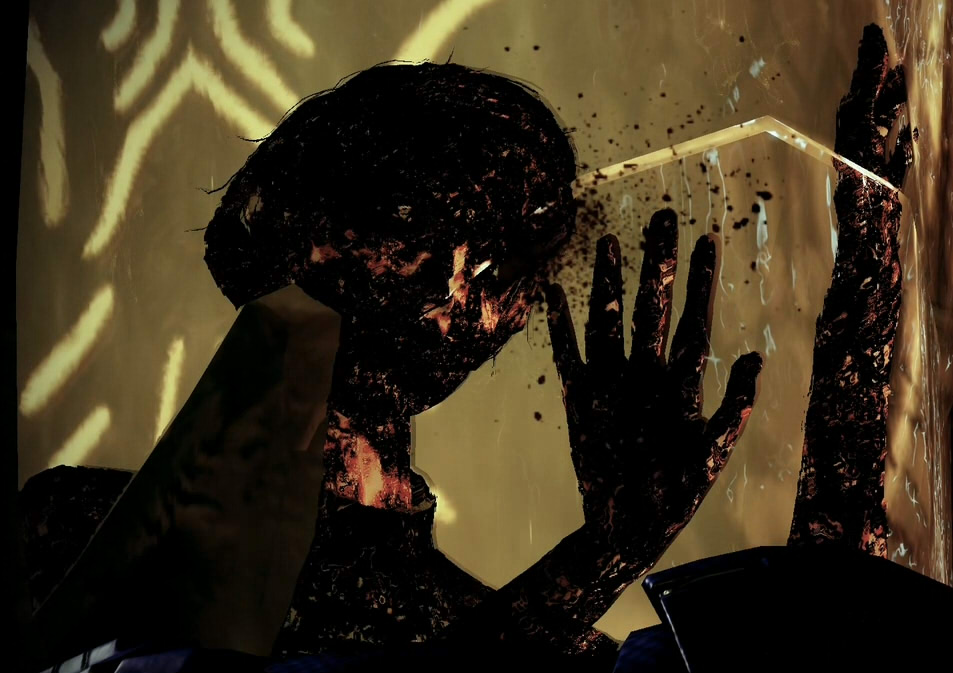
Take for example, Mass Effect 2. Towards the endgame the player's shipmates are kidnapped by an alien force. The player is then given a choice which seems fairly harmless-- save their crew immediately or take time to prepare before embarking on the rescue mission. Not until the player finally decides to give chase to the alien kidnappers do the repercussions of their decision come into play. Depending on how long the player waits before saving the crew the player will be treated to a cutscene during the rescue mission. If the player left immediately after the kidnapping they are treated to a scene where they successfully save them from death. However, if they decided to wait, they will be forced to watch their crew die as the protagonist fruitlessly tries to save them.


The reason I find this an excellent example is that the consequences are not spelt out directly for the player. While it is implied that abandoning them temporarily could be bad, as well as being immoral, it isn't explicitly stated-- it purely comes down to the gut feeling of the player. The weight of their action is not discovered until much later in their playthrough when they finally embark on the mission. During this time they may have developed other plotlines making it harder for the player to sacrifice all their effort made in the meantime in order to revert their save and erase their regrets. Not only that, but there is also risk in recklessly giving chase. Unless the player was organised enough to be fully-prepared for the venture, the result could end up jeopardising the lives of the player's companions that join the mission. Therefore the question asked when you make your choice can essentially be boiled down to: "Should I place my crew at risk or my companions?". By framing such an important question as "leave now or prepare first" the weight of the choice is disguised without being dishonest. This allows the player to answer truthfully based on their own volition and without influence, giving the game an opportunity to truly dissect the player.

Most important of all however, is that there is a lasting impact based on the outcome. For the rest of the game, if the crew dies they will be absent from the spacecraft.  For example, your ship's yeoman-- and potential love interest-- is dead and gone forever. You can't ever speak to her again. Conversely, if one of your companions dies, their room will now sit eerily empty, permanently. You may have saved the galaxy but you couldn't save those who helped you reach that goal. There is a distinct emptiness, a twinge, in the otherwise gleaming tale. The hero isn't perfect, they were human like the rest of us. And that's what makes the story so much more memorable.