A qualm I've had with recent video games, particularly those with branching narratives, is that they always seem to push the plot (explicitly or implicitly) towards the 'perfect ending': the conclusion where nobody dies, everyone is fulfilled and the ancient evil is vanquished. Regardless of the themes or narrative genre, this type of ending is typically pushed as the true, 'canon' ending. While I'm against games attaching preferences to certain outcomes since it invalidates players' choice, I feel that elevating these flawless runs is particularly disingenuous.
In many stories, regardless of structure, the hero typically reaches some sort of low point in their journey-- the death of a master, the destruction of a homeland, a betrayal of an ally, the list goes on. Typically these events reframe the character from a different perspective. The story takes a pause, and the hero takes a moment to reevaluate who they are and why they set out on their journey. In games, the choices we make as a player can come with similarly severe consequences and like the low points of these heroes, they too can provide the player with a moment of introspection to reflect on their decisions. But where games can really shine is in their ability to reach out and comment directly on the player's own decisions and circumstances.
However, with the proliferation of these 'perfect' endings there is no way to communicate any interesting ideas with the player-- there is no opportunity to really dig deep into the player's own mind. Since players can also practice 'save-scumming'[1] without penalty these perfect endings are easily achieved without any sort of development or growth from the player.
If the player can achieve the perfect surely that means that they have nothing new to learn from the game?
The idea of the perfect ending is not inherently bad, so long as it's not dissonant with the game's message. If a game does go on to include it, the requirement to obtain it should be far beyond the reach of most players. Only by understanding and learning the ideas the game has put across, taking these into account, and using them to develop and address their shortcomings should players be able to achieve narrative perfection within a game. While the effort required to achieve this will depend on the nature of the story being told, it seems as if there is a universal trend within the industry to make these flawless endings within everyone's grasp by the first or second playthrough. This leaves games with few opportunities to tackle any of the issues they attempt to explore through player choices. Typically these endings are reached by completing some additional side-quests or reaching a certain level of relationship with some characters, even if they don't appear to have any connection to the progression of the plot. These additions do not challenge the player. They are only there to guilt trip the player into wading through more of the game's content by dangling the bait of a 'true and complete' ending in front of their faces. The only thing that it really challenges is the player's patience.
This road to perfection is made all the easier due to the fact that players can simply revert saves with no punishment when a wrong decision is made or a mission fails. The current design philosophy allows players to save as much and as often as possible, meaning that all weight associated with each action is essentially eliminated-- the player can simply replay scenarios again and again until they discover the best or most fitting outcome for their character. This leaves little to no room for a game to actually tap into the psyche of the player and shape the story based upon their true self. If the player really is such a saint there are no flaws to examine or discuss.
However, there are a few instances of games taking advantage of these player habits. At the climax of the first act of Undertale, the player has to fight Toriel, a mother-like figure and teacher to the player. Up until this fight, the player is taught that it is possible to 'spare' the people you fight. Doing so usually involves uncovering a certain technique during the fight that subdues the adversary peacefully. Here, players need to figure out how to save Toriel in the midst of the fight while also avoiding her own attacks. As a result, many players in this situation may end up unintentionally killing her. After her death, the player is then berated by the antagonist for their killing of their own friend.
Naturally, at this point many players regret their actions and reset their game, redo the fight, and save Toriel, all in order to cleanse themselves of any wrongdoing they feel guilty about. Except here, unlike other games, the antagonist will mock you again after the fight. He still remembers what you've done. He informs you that while everyone else may have forgotten, he will still remember the sins you've committed. This is a powerful scene as it openly confronts the player and exposes their habit of erasing their mistakes as well as questioning their own morals. Is the player still a good person? Are they still a murderer? More interestingly however is the form of the punishment-- it isn't tangible like a score deduction or item loss. Instead, it only questions the player's own understanding of themselves. Those that truly concern themselves with playing perfect are given reason to question that image and even if that ideal is really attainable. While you may have saved her this time, he will remember you as a murderer and you can't change that. A small blemish- in an otherwise spotless image- that can't be washed away. Players may even behave differently as they realise that all their actions, in some sense, are final-- regardless of how the player attempts to circumvent their consequences. For a game that discusses morality, bounding consequences to their actions so tightly is incredibly compelling-- and necessary. It is no surprise that this event is for many one of the most memorable scenes from Undertale, or perhaps games in general as it is one of the few moments where a game so keenly cross-examines the player after exposing their actions.

It is important to note that not every game needs to introduce a meta-level response to tackle this habit of consequence avoidance. It is important however to prevent players from taking advantage of these systems if the game's narrative requires it. Many players will take advantage of flexible and unlimited saving if the game's mechanics permit it, even if it goes against the game's message. One method to eliminate this is for the game itself to take full control of when the game saves: whenever a major decision is made, the previous save is overwritten so that there is no way to redo your choice. Alternatively, the fallout from decisions could be delayed in such a way so that their actual results emerge much later into the playthrough. However, in such a system it might be difficult to deduce what decision led to the resulting outcome due to the blurring of the relationship between action and reaction. Depending on the nature of the game this could improve or damage the message as it leads to uncertainty within player as to whether or not they are actually culpable for the current scenario. Despite this, it shows that challenging decisions can still hold weight even if the game uses a mainstream saving system.
Take for example, Mass Effect 2. Towards the endgame the player's shipmates are kidnapped by an alien force. The player is then given a choice which seems fairly harmless-- save their crew immediately or take time to prepare before embarking on the rescue mission. Not until the player finally decides to give chase to the alien kidnappers do the repercussions of their decision come into play. Depending on how long the player waits before saving the crew the player will be treated to a cutscene during the rescue mission. If the player left immediately after the kidnapping they are treated to a scene where they successfully save them from death. However, if they decided to wait, they will be forced to watch their crew die as the protagonist fruitlessly tries to save them.
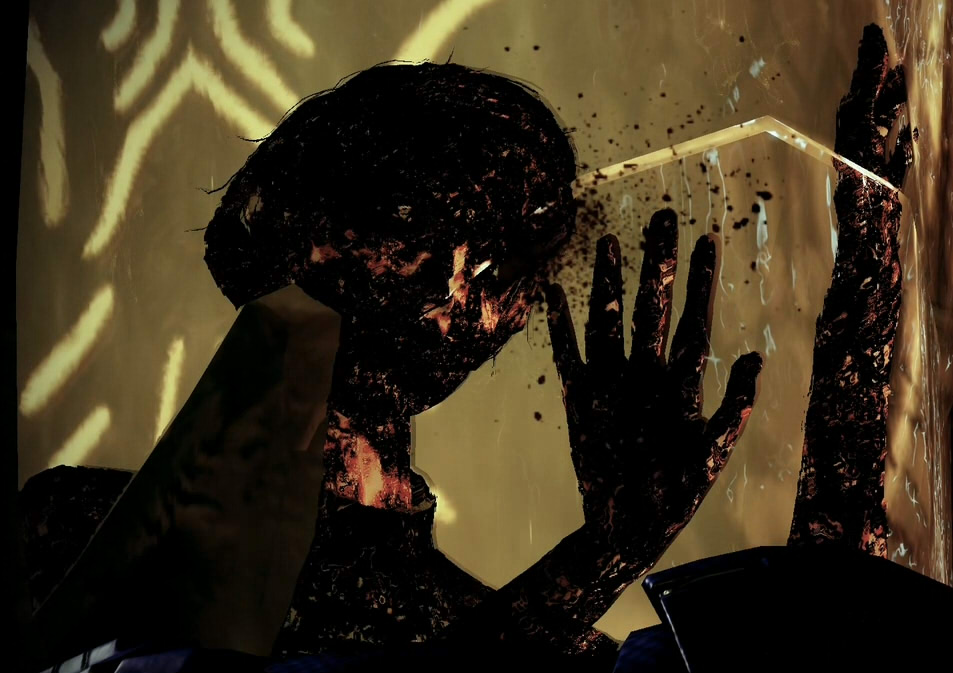
The reason I find this an excellent example is that the consequences are not spelt out directly for the player. While it is implied that abandoning them temporarily could be bad, as well as being immoral, it isn't explicitly stated-- it purely comes down to the gut feeling of the player. The weight of their action is not discovered until much later in their playthrough when they finally embark on the mission. During this time they may have developed other plotlines making it harder for the player to sacrifice all their effort made in the meantime in order to revert their save and erase their regrets. Not only that, but there is also risk in recklessly giving chase. Unless the player was organised enough to be fully-prepared for the venture, the result could end up jeopardising the lives of the player's companions that join the mission. Therefore the question asked when you make your choice can essentially be boiled down to: "Should I place my crew at risk or my companions?". By framing such an important question as "leave now or prepare first" the weight of the choice is disguised without being dishonest. This allows the player to answer truthfully based on their own volition and without influence, giving the game an opportunity to truly dissect the player.
Most important of all however, is that there is a lasting impact based on the outcome. For the rest of the game, if the crew dies they will be absent from the spacecraft. For example, your ship's yeoman-- and potential love interest-- is dead and gone forever. You can't ever speak to her again. Conversely, if one of your companions dies, their room will now sit eerily empty, permanently. You may have saved the galaxy but you couldn't save those who helped you reach that goal. There is a distinct emptiness, a twinge, in the otherwise gleaming tale. The hero isn't perfect, they were human like the rest of us. And that's what makes the story so much more memorable.

